Why Side Hustle Culture Feels Like Never Ending
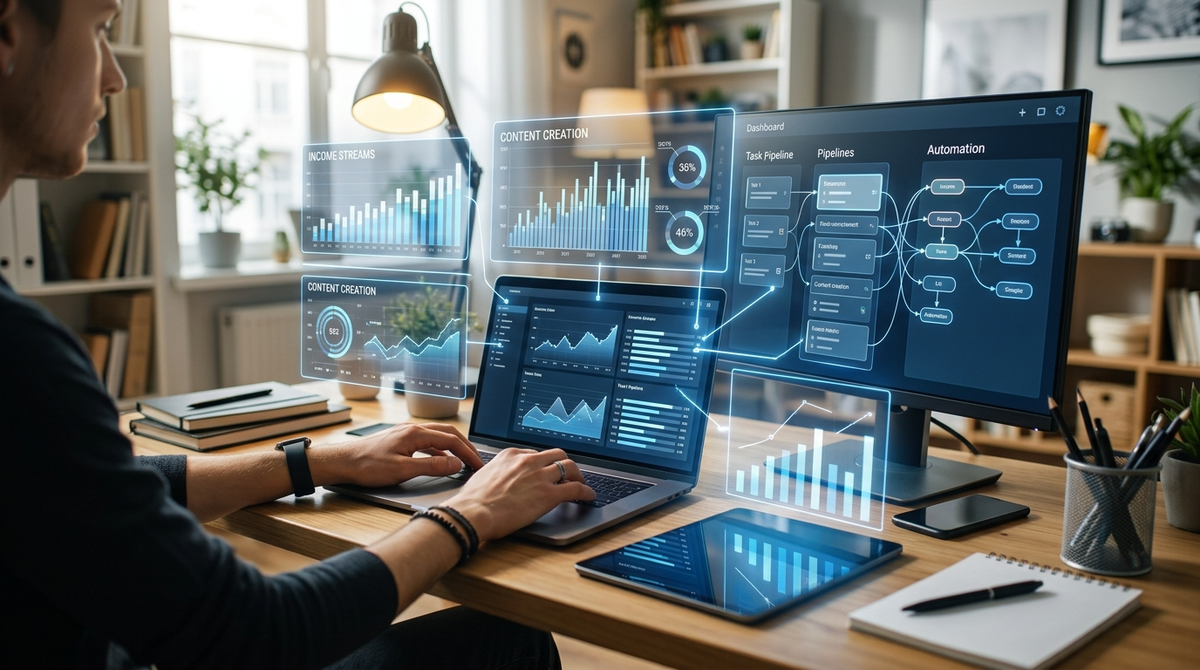
Everywhere online, people are talking about side hustles. Freelancing. Content creation. Affiliate marketing. Dropshipping. Trading. Digital products. Passive income. The message is constant and impossible to ignore:
“You should be earning more.”
There was a time when having one source of income felt normal.
Now it almost feels irresponsible.
Everywhere online, people are talking about side hustles. Freelancing. Content creation. Affiliate marketing. Dropshipping. Trading. Digital products. Passive income. The message is constant and impossible to ignore:
“You should be earning more.”
And for many people, that message no longer feels motivational. It feels exhausting.
What started as a financial ambition slowly turned into a culture of permanent productivity. A culture where free time feels unproductive unless it can somehow be monetised.
The strange part is that most people are no longer chasing luxury. They are chasing breathing room.
A little less stress.
A little more flexibility.
The ability to say no sometimes.
That’s what makes modern side hustle culture different from older ideas of entrepreneurship. Earlier, “extra income” was often about growth. Today, for many people, it feels closer to survival.
Living costs continue rising while digital culture constantly expands what people feel they should own, experience, and achieve. Social media quietly reshaped financial expectations. You no longer compare yourself to neighbours or classmates. You compare yourself to thousands of curated lives every single day.
Someone is always travelling.
Building a startup.
Launching a brand.
Making money online.
Buying better things.
Living more freely.
Selling or swapping what you already own.
New platforms are emerging around resale, swapping, and smarter ownership behaviours. Even when people understand that much of the internet is performative, the psychological effect still exists. Repeated exposure slowly changes what feels “normal.”
As a result, a single salary often feels emotionally insufficient, even before it becomes financially insufficient.
At the same time, the internet made earning look deceptively accessible.
Every platform is filled with stories about overnight success. Teenagers becoming millionaires. Creators earning from their phones. Passive income systems run while people sleep. The barrier between ordinary life and financial freedom appears smaller online than it actually is.
But what rarely gets shown is the invisible cost behind this mindset.
The constant pressure to optimise yourself.
To stay relevant.
To keep producing.
To turn hobbies into businesses.
To turn interests into income streams.
To turn identity into content.
Eventually, it becomes difficult to separate life from productivity.
Rest starts feeling guilty.
Relaxation feels earned instead of natural.
People begin measuring time by its earning potential rather than its emotional value.
That is one reason side hustle culture feels endless. It is no longer just economic. It became psychological.
The internet rewards visibility, speed, and consistency. Algorithms do not care if people are tired. There is always another trend, another platform, another opportunity that feels urgent. And because opportunities move so quickly online, many people feel that slowing down means falling behind.
This creates a strange form of digital anxiety.
Even while resting, people feel they should be doing more.
Learning more.
Posting more.
Building more.
And ironically, the more connected people become online, the harder it becomes to feel “finished.” There is no clear endpoint anymore. No moment where the system says:
“You’ve done enough.”
That uncertainty keeps the cycle alive.
But beneath all of this, another shift is quietly emerging.
Some younger users are beginning to question whether constant expansion is sustainable at all. Instead of trying to endlessly increase income, they are exploring ways to reduce unnecessary spending, use resources more efficiently, and rethink ownership itself.
Second-hand marketplaces are growing.
Swapping is becoming normalised.
Minimalism is becoming practical instead of aesthetic.
People are starting to care less about owning and more about wasting less.
This shift matters because it changes the equation entirely.
If every financial problem is approached only through “earn more,” exhaustion becomes inevitable. But if part of the solution becomes “use what you already have better,” the pressure starts to reduce.
That doesn’t eliminate ambition. It changes its direction.
The future may not belong only to people constantly building more income streams. It may also belong to people who understand how to create more value from what already exists.
Perhaps the real reason side hustle culture feels never-ending is not that people have become greedier.
It’s that modern life has become harder to feel secure in.
